
CKM Syndrome
The Silent Domino Effect Happening Inside You

Hello, Health Enthusiasts!
Welcome to this week’s installment of our Informative Health Blog, lovingly written by yours truly and posted every Saturday morning, my attempt to keep you informed (and laughing a little) while talking about serious stuff — even when it involves your plumbing. If health blogs aren’t your thing, you can easily opt out. But if there’s a topic you’d love to see covered, drop me a line.
Stay healthy, stay curious, and as always, thanks for reading!
Warm regards,
Andrew Siegel MD

CKM Syndrome: The Silent Domino Effect Happening Inside You
Here’s the good news first, because everyone deserves dessert before broccoli: Americans are less likely to die from heart attacks and strokes than they were just a year ago. Life expectancy is inching up. Modern cardiology, medications, stents, and good old-fashioned prevention are doing real work.
Now for the plot twist.
According to the American Heart Association, nearly 90% of U.S. adults have at least one risk factor for a newly emphasized condition called Cardiovascular–Kidney–Metabolic (CKM) syndrome. That’s not a rare disease affecting “other people.” That’s… basically all of us. Yes, including the marathon runner with the green smoothie and the guy who only eats vegetables on Super Bowl Sunday.
So what exactly is CKM syndrome?
Think of CKM syndrome as the extended universe of chronic disease. It links together:
Heart disease
Kidney disease
Diabetes
Obesity
High blood pressure
Abnormal cholesterol
Each condition quietly nudges the others along, like friends encouraging bad behavior. You might feel fine. You might even feel great. But underneath, these risk factors can be slowly stacking up—no symptoms, no warning sirens, no dramatic chest clutching.
That’s why doctors call it silent disease. It doesn’t announce itself. It just shows up later, uninvited, and rearranges your life.
The mixed report cards
Cardiologists describe the latest AHA data as a “mixed report.” Fewer people overall are dying from cardiovascular events, which is genuinely encouraging. But certain trends are moving in the wrong direction—especially among the very young and the very old.
Stroke deaths have increased in adults ages 25–34 and in those over 85. Even more unsettling, rates of obesity, high blood pressure, and diabetes are rising in children and adolescents. That means tomorrow’s heart disease is quietly being booked today.
One cardiologist put it bluntly: celebrating fewer heart attacks while ignoring these trends would be like applauding the fire department while ignoring the smoke alarm.
Enter: Life’s Essential 8
The AHA isn’t just pointing fingers—they’re offering a roadmap. It’s called Life’s Essential 8, and it focuses on eight modifiable factors that have an enormous impact on long-term heart health:
Life’s Essential 8
Healthy eating
Regular physical activity
Avoiding tobacco
Getting adequate sleep
Maintaining a healthy weight
Keeping blood pressure in a good range
Keeping blood sugar in a good range
Keeping cholesterol in a good range
Here’s the part that should get your attention: improving these areas could prevent up to 40% of all cardiovascular and all-cause deaths. That’s not a small tweak—that’s a population-level mic drop.
The 80/20 rule (or: how to eat like a grown-up without being miserable)
Eat whole, minimally processed foods about 80% of the time. Leave room for joy, flexibility, and the occasional slice of pizza for the other 20%.
This is not about perfection. It’s about consistency. Nobody gets heart disease because of a single cupcake. It’s the thousands of tiny decisions made quietly over years that matter most.
Why this matters—even if you feel fine
The most dangerous phrase in medicine might be: “But I feel okay.” CKM risk builds silently, often for decades, before announcing itself with a stroke, heart attack, or kidney failure. By the time symptoms show up, the game is harder to win.
Prevention isn’t dramatic. It doesn’t make for exciting TV. It looks like walking more, sleeping better, eating real food most of the time, checking your numbers, and not ignoring your doctor when they say, “Let’s keep an eye on this.”
The takeaway
Yes, heart care is improving. Yes, modern medicine is remarkable. But the data are clear: we can’t outsource our future health entirely to pills and procedures.
The quiet choices you make today—how you eat, move, sleep, and manage stress—are shaping your heart, kidneys, and metabolism for years to come. The good news? You don’t have to do everything. You just have to do something, consistently.
Your heart doesn’t need perfection.
It just needs you to pay attention before it starts shouting. ❤️
Wishing you the best of health,
Andrew Siegel, MD
Dr. Andrew Siegel is a physician and urological surgeon who is board-certified in urology as well as in female pelvic medicine and reconstructive surgery. His mission is to “bridge the gap” between the public and the medical community.
He is an Assistant Clinical Professor in the Department of Urology at Hackensack Meridian School of Medicine and is a Castle Connolly Top Doctor New York Metro Area, Inside Jersey Top Doctor and Inside Jersey Top Doctor for Women’s Health. He is a urologist at New Jersey Urology, a Summit Health Company.
Dr. Siegel is the author of several books. The second edition of his prostate cancer book is available in print and Kindle formats at Amazon: Prostate Cancer 20/20: A Practical Guide to Understanding Management Options for Patients and Their Families. The audiobook version is available at Amazon: Prostate Cancer 20/20 Audiobook.
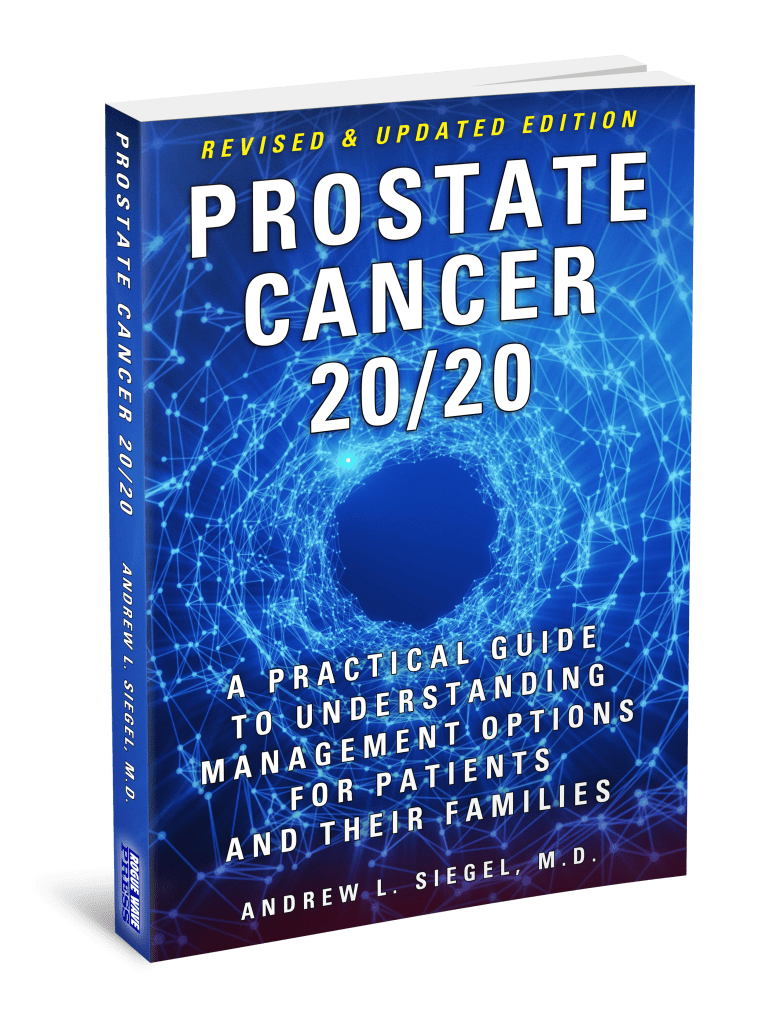
Video trailer for Prostate Cancer 20/20
Preview of Prostate Cancer 20/20
Andrew Siegel MD Amazon author page
Dr. Siegel’s other books:
THE KEGEL FIX: Recharging Female Pelvic, Sexual, and Urinary Health
MALE PELVIC FITNESS: Optimizing Sexual and Urinary Health
PROMISCUOUS EATING: Understanding and Ending Our Self-Destructive Relationship with Food
Good morning Dr. Siegel, thank you for the good information. I read the whole thing and you are absolutely right. All of these issues are very quiet and when something happens, that’s when the problems occur and it’s all over. Wish you a good healthy weekend. Enjoy your grandson. Looking forward to read next chapter next week. Thank you again.